
Stage 1: Identify species and pathway
Stage 1: Identify species and pathway
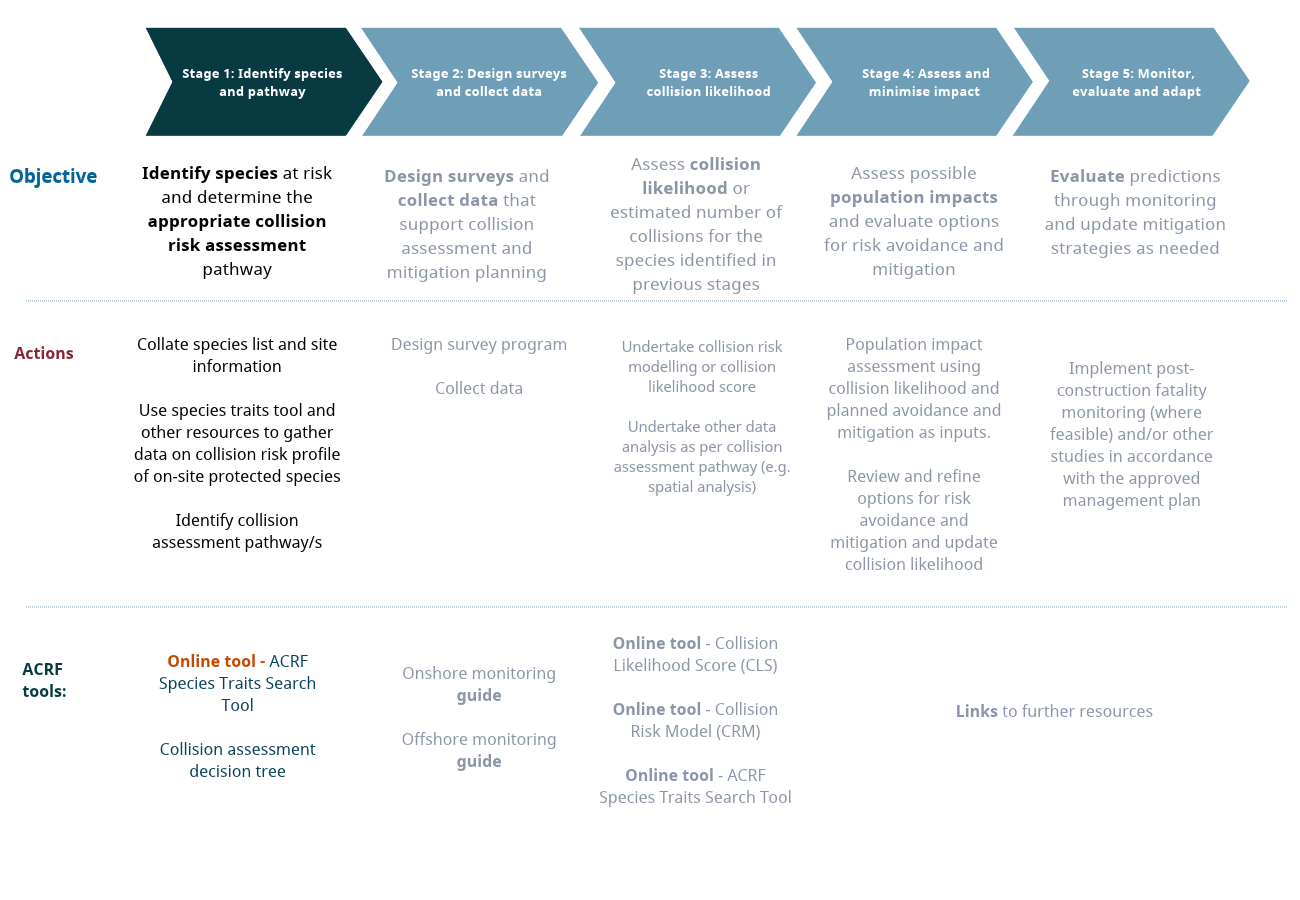
Identify species at risk and determine the appropriate collision risk assessment pathway. Understand more about collision risk and document collision factors for specific species.
Objective and scope
Identifying species that may be at risk of collision and selecting the appropriate collision likelihood assessment pathway are the first steps in applying the ACRF. Early assessment helps ensure that subsequent surveys and assessment methods are proportionate, targeted, and fit for purpose.The aim is not to quantify collision likelihood at this stage; but to understand if avoiding or mitigating collision risk will be a major factor in the development of a particular site.
Key questions: Which bird or bat species may occur within or use the project area? Which bird or bat species may be susceptible to collision? What evidence is available to assess collision likelihood? What are the key information gaps and uncertainties? Which assessment pathway is appropriate: CRM, CLS, or hybrid?
Spatial scope: Regional and project-level assessment, including site selection, project siting and inter-site prioritisation.
Project timing: As early as practicable during site selection and constraints mapping, and preferably before substantial resources are committed to field surveys.
Key Activities:
Outputs:
Documents and applications
Third party resources
Information on the broader commonwealth impact assessment process
Species sensitivity mapping and assessment of collision population impacts:
